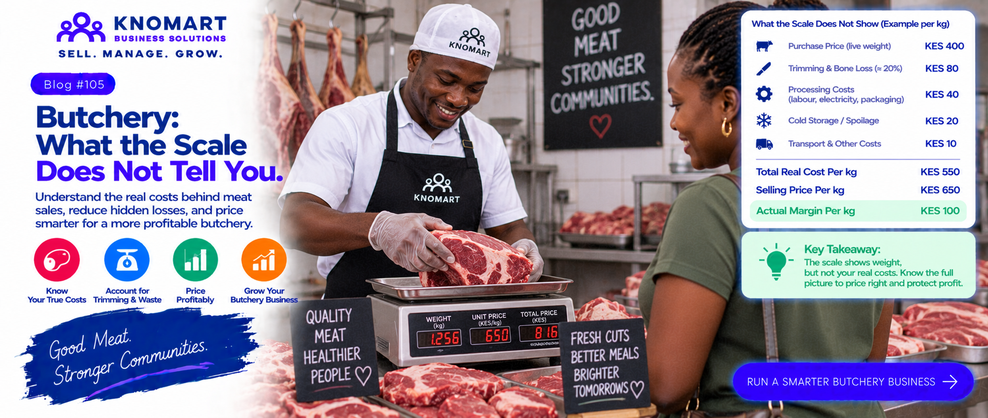
A butchery buys by one weight and sells by another. The difference between them is the business, and a scale at the door only shows you one side of it.
Yield is the number that matters
What you pay for is carcass weight. What you can sell is what remains after bone, fat, trim and moisture loss. That saleable proportion is your yield, and your real cost per kilo is the purchase price divided by it — not the purchase price itself.
Price against purchase weight and you are selling below cost on every kilo, by exactly the yield gap.
Establish your own yield
Yields vary by supplier, by animal, by season and by how the carcass was handled. General figures are a starting point, not an answer. Weigh in, weigh what you cut, and record it for a few weeks — your own average is the only one that can price your counter.
Not every cut is worth the same
A carcass yields premium cuts, ordinary cuts and trimmings, and each sells at a different price. Costing the whole animal at one blended rate means the premium cuts subsidise nothing and the cheap cuts lose money. Break the value down by cut and the price list arranges itself.
Shrinkage after the cut
Meat continues losing weight in display. Product held too long is marked down or discarded. Both are real costs that appear nowhere on the purchase invoice, and both are worse in a hot shop with an unreliable chiller.
The costs around the meat
Power for chillers and display, which runs whether you sell or not. Packaging. Waste disposal. Labour to break the carcass. Cleaning, which is not optional in this trade.
What to record
Weight purchased, weight cut by category, weight sold, and weight discarded. That short list gives you your true yield, your true cost per kilo, and an early sight of the weeks when losses are climbing — which is the only moment you can still do something about them.
Ready to get started?
Explore our apps and find the right one for your trade.