Restocking is a normal business cost. The problem is leaving it until the last minute.
Stock Does Not Disappear at Random
Your sales leave clues.
Some products move quickly. Others sit for longer. Some are essential to your everyday sales, while others can wait. When you pay attention to what is moving, restocking becomes less of a guess and more of a regular business decision.
The goal is not to keep everything heavily stocked. It is to understand what your business actually needs.
Use Your Own Numbers
Knomart gives merchants basic inventory and reporting tools, alongside sales records. Those records can help you see what is happening instead of relying entirely on memory. fileciteturn106file1L23-L40
Look at the relationship between what you sell and what remains in stock. If something repeatedly moves faster than other items, it deserves more attention when you plan your next order.
Do Not Wait for the Empty Shelf
The worst time to think about restocking is when a customer is already asking for something you no longer have.
Make stock review part of the normal rhythm of running the business. Check what is moving, identify what is getting low and think about the next supply requirement before it becomes urgent.
This is especially important for products that customers expect to find regularly.
Restocking Is Also a Merchant-to-Merchant Activity
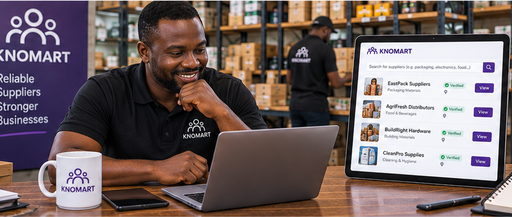
When you need supplies, Knomart's merchant marketplace gives you options to discover suppliers, request quotations and post supply requests. fileciteturn103file3L73-L89
That means restocking does not have to begin with calling the same supplier you have always used. A clear supply need can become a business-to-business opportunity within the wider merchant network.
Plan, Then Buy
Good restocking is not about buying as much as possible.
It is about matching your purchasing decisions to the needs of your business. Know what is moving, understand what you already have and consider which supplies need attention first.
Restocking will always be a cost. The smarter move is to make it a planned cost rather than an emergency.
The Simple Habit
Check your stock. Look at your sales. Identify what is moving. Plan the next supply need before you run out.
When you treat restocking as a predictable part of business rather than an unexpected problem, you gain better control over both your shelves and your cash.
Ready to get started?
Explore our apps and find the right one for your trade.